• 1603 sea battle off Changi

  • ​​​ What could we learn from the 1603 sea battle off Changi?

    At the dawn of the seventeenth century, Singapore was a happening place at the crossroads of seaborne traffic. It had a functioning port and a shahbandar (port master). When the Portuguese merchantman Santa Catarina was attacked and plundered by the Dutch with the support of Johor on 25 February, 1603, Singapore became a cradle of the laws of war and peace. The incident formed the basis of a discussion by Hugo Grotius published in 1609 as The Freedom of the Seas. This was one of the historically most influential works ever published on the freedom of trade and navigation on the high seas.

    ​But that’s not all. The Portuguese authorities in Melaka were miffed at the loss of the Santa Catarina and at the staggering losses the Dutch and the Johoreans inflicted on the merchants of Macao, Melaka and Goa---the owners of the Santa Catarina’s rich cargo. To punish Johor for its role in the Santa Catarina incident, the Portuguese imposed a blockade on the Johor River between in August and October, 1603. At the end of September, unexpectedly, a squadron of the Dutch East India Company (VOC) showed up off Pasir Panjang. The Dutch ships were lost and disoriented by the maze of islands of the Singapore Straits. While they were attempting to find their way through Singapore waters, they were informed by local fishermen of the Portuguese blockade. The events that began to unfold from this point onward brought the scene of action back to Changi.

    The different stages of the Dutch battle with the Portuguese in the Johor River, off Changi and in the final stage off northern Batam were captured on a map sketch with published in 1606. This map sketch together with the travelogue of the Dutch naval commander who spearheaded the attacks on the Portuguese off Changi will form the backbone of this lecture. ​

  •  — David Lim “The Singapore Maritime Heritage Interest Gro’s efforts in promoting our maritime stories have enriched our cultural landscape. Their work is vital to preserving our national identity.”  Our community has celebrated over 300 stories that preserve Singapore's maritime legacy To share, promote, encourage, and support both the tangible and intangible aspects of Singapore's maritime-related heritage.


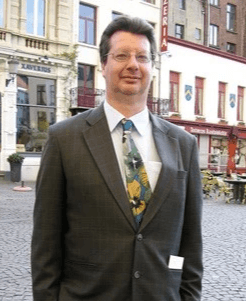
    Dr. Peter Borschberg is a fellow of the Royal Historical Society in London and teaches history at the National University of Singapore for the past 25 years. His past research interests cover Asia-Europe interactions with a focus on Southeast Asia and the Straits region.